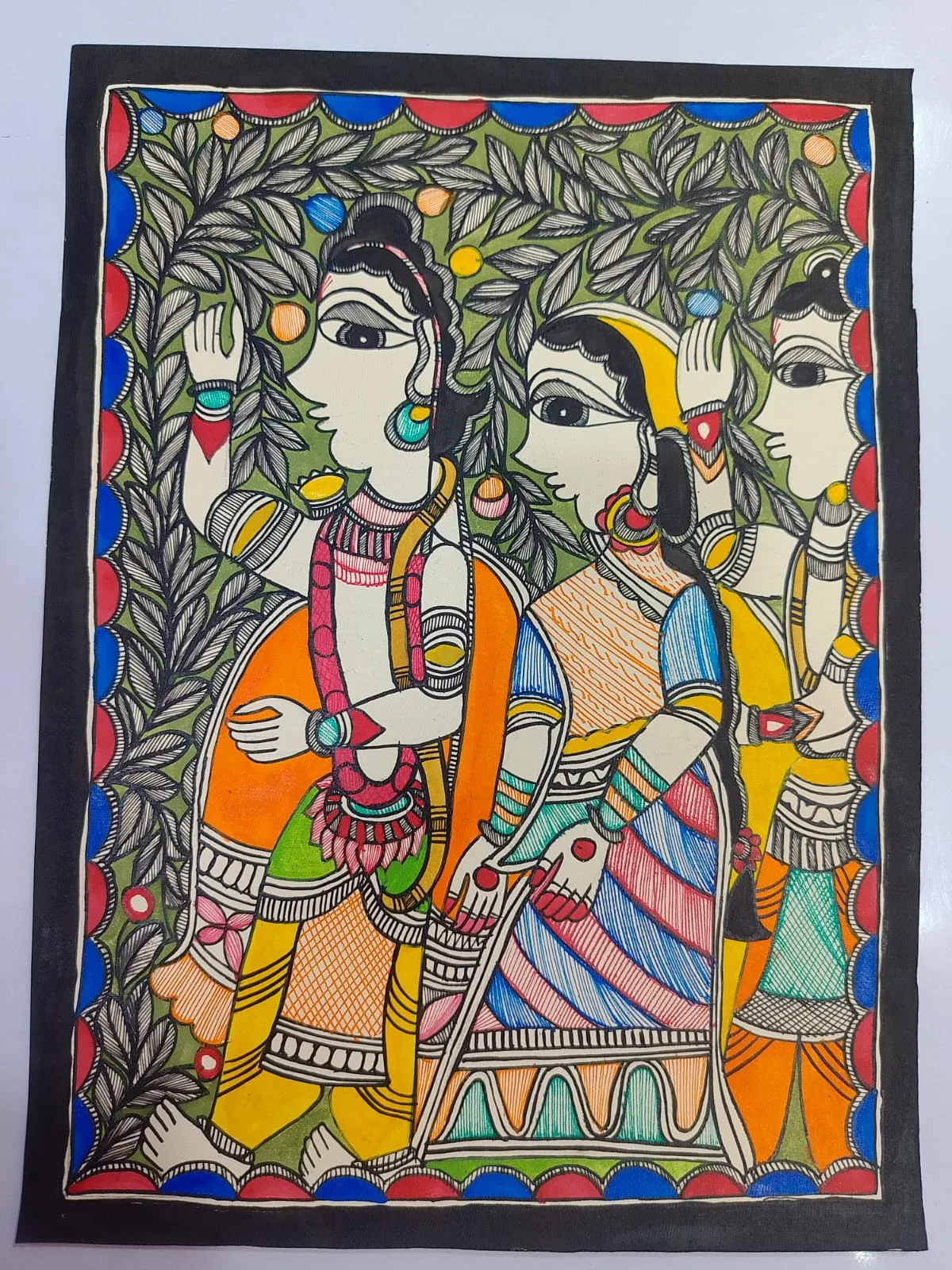
This is one of the most painted themes in Mithila art from Janakpur, because Sita was born here.
The Story:
1. The Exile: King Dasharath of Ayodhya was bound by a promise to send his eldest son, Lord Ram, into exile for 14 years. Ram accepted it without anger, to uphold dharma and his father’s word.
2. Sita’s Choice: Sita, Ram’s wife and daughter of King Janak of Mithila/Janakpur, refused to stay back in the palace. She said a wife’s place is with her husband, whether in a palace or forest.
3. Lakshman Joins: Lakshman, Ram’s younger brother, also insisted on coming. He vowed to serve Ram and protect Sita throughout the exile.
4. Life in the Forest: The three left Ayodhya, gave up royal clothes for bark and simple garments, and lived in forests like Dandaka and Chitrakoot. They built kutiyas, foraged fruits, and lived simply. The dense trees, rivers, and animals in Mithila paintings represent this time — peaceful but full of trials.
5. The Purpose: It was during vanvas that key Ramayana events happened — meeting sages, Sita’s abduction by Ravana from Panchavati, and later the war to bring her back.
Why Mithila artists paint this scene so much:
- Connection to Janakpur: Sita is Maithil’s daughter. Painting her vanvas with Ram and Lakshman is both devotion and cultural pride.
- Symbolism in the art: The tree canopy = forest life. Fruits = forest food. The close grouping of the 3 figures = unity and sacrifice. Bright colors despite hardship = hope and dharma.
That’s exactly what your painting captures — the trio together under the forest, supported by each other.
Would you like me to create a new Mithila-style image of the next scene — like Sita, Ram & Lakshman at Panchavati or Hanuman meeting Sita in Ashok Vatika?This Mithila painting can also be read as Lord Ram, Sita, and Lakshman during their vanvas/exile in the forest.
How it matches the Ramayana scene:
- Three figures together: Ram on the left in yellow/orange dhoti with royal jewelry, Sita in the center with the striped sari and large earrings, and Lakshman on the right.
- Forest setting: The dense leaf canopy with fruits above them is classic Mithila symbolism for the Dandaka forest. Artists often use trees to show they’re living away from Ayodhya.
- Gestures: Hands raised toward the branches is often used in Mithila to show foraging, resting, or reverence to nature during exile.
- Mithila style details: The double red-blue scalloped border, thick black frame, and Bharni-style flat coloring are all signature elements you’ll see in Janakpur galleries like Poonam Mithila Art Gallery.
Ramayana themes are some of the most loved in Mithila art from the Mithila region, because Janakpur is Sita’s birthplace. Artists here frequently paint Ram-Sita vivah, vanvas, and Ashok Vatika scenes.
Want me to generate another Mithila-style Ramayana scene — maybe Ram breaking Shiva’s bow at Dhanusha Dham?
Arjun Jha
This is a static bio section. You can make it dynamic if authors are user profiles.


 0
0


0 Comments
No comments yet.
Leave a Comment
You must log in to leave a comment.